Shapes
Types of nose shapes: a practical visual guide
Learn common nose shapes — straight, aquiline, button, Roman, snub, and more — with a comparison table and how to describe bridge, tip, and width.
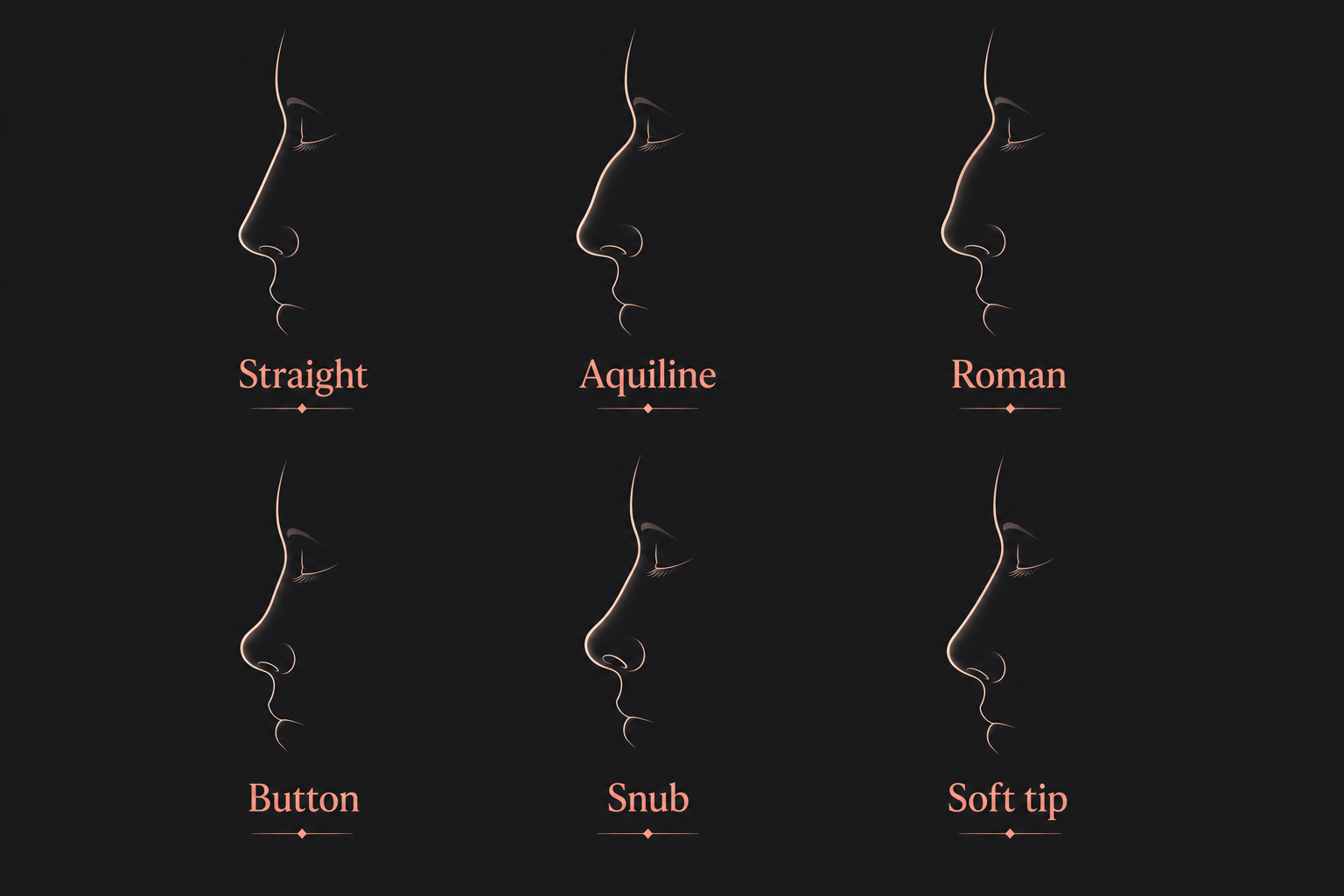
Quick answer: Nose shapes are usually described by bridge line, tip shape, and width. Common names include straight, aquiline, Roman, button, snub, and soft-tip. Most people are a mix — use bridge/tip/width if a single label feels forced.
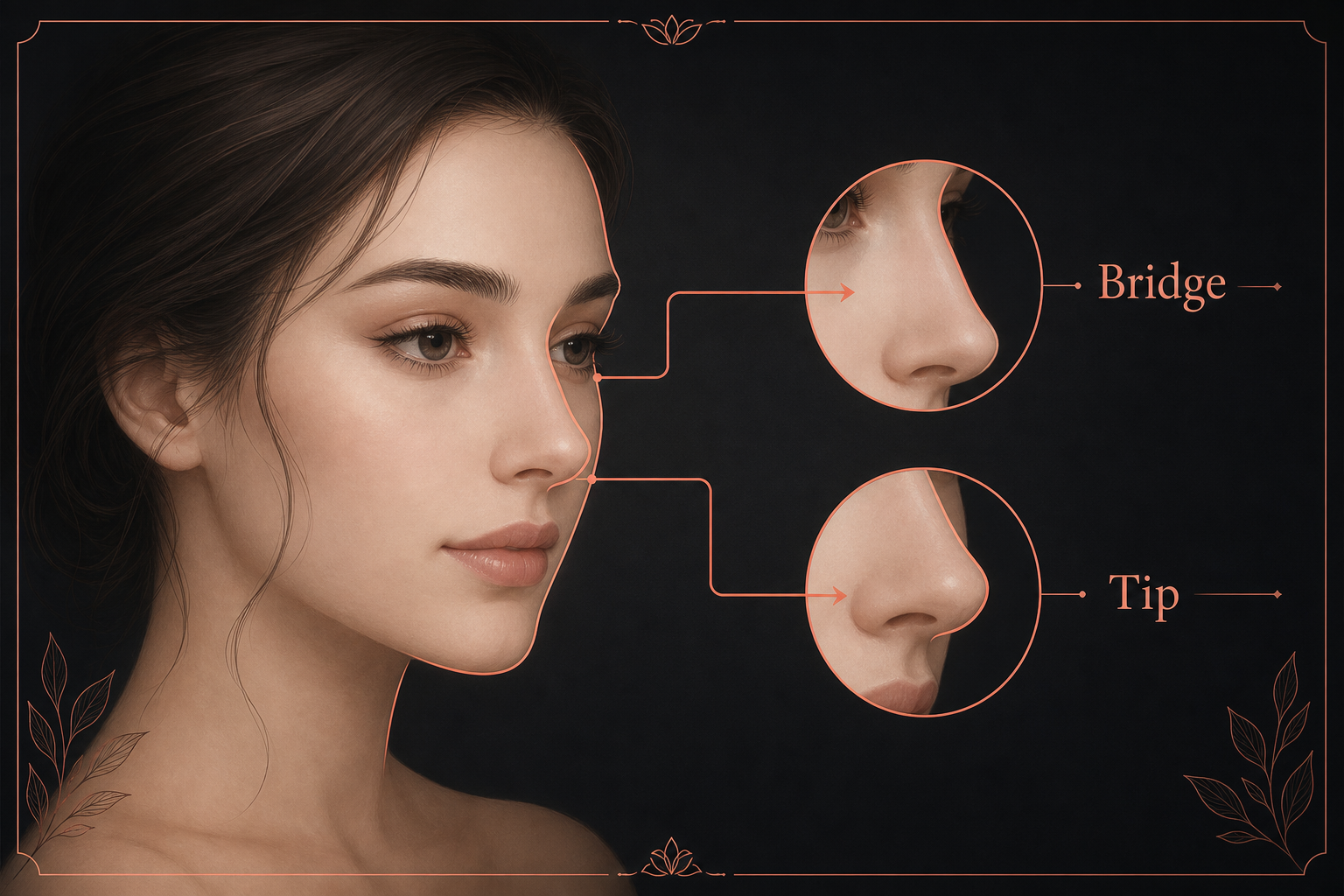
Use three words first: bridge, tip, width.
Front photos exaggerate width; profile photos show bridge line.
Labels help conversation — they are not diagnoses.
Nose shape comparison sample
| Shape label | What people usually notice | Best photo angle | Preview tip |
|---|---|---|---|
| Straight | Even bridge line in profile | True profile | Start with very light strength |
| Aquiline / hooked | Convex bump on bridge | True profile | Preview bridge-only first |
| Roman | Strong sloping bridge | Profile + 3/4 | Keep tip familiar |
| Button / soft tip | Rounder tip from front | Front + 3/4 | Preview tip refinements |
| Snub | Shorter look, softer upturn | Front + profile | Avoid extreme shortening |
| Wider base look | Width relative to eyes/cheeks | True front | Modest width changes only |
Sample description you can copy
Preference note template
- In profile, my bridge looks: smooth / bumped / high.
- From the front, my tip looks: round / pointed / soft.
- Width feels: balanced / wide in selfies / narrow.
- I want to explore: a subtler bridge / a softer tip / both lightly.
How to use this in Nose Shape
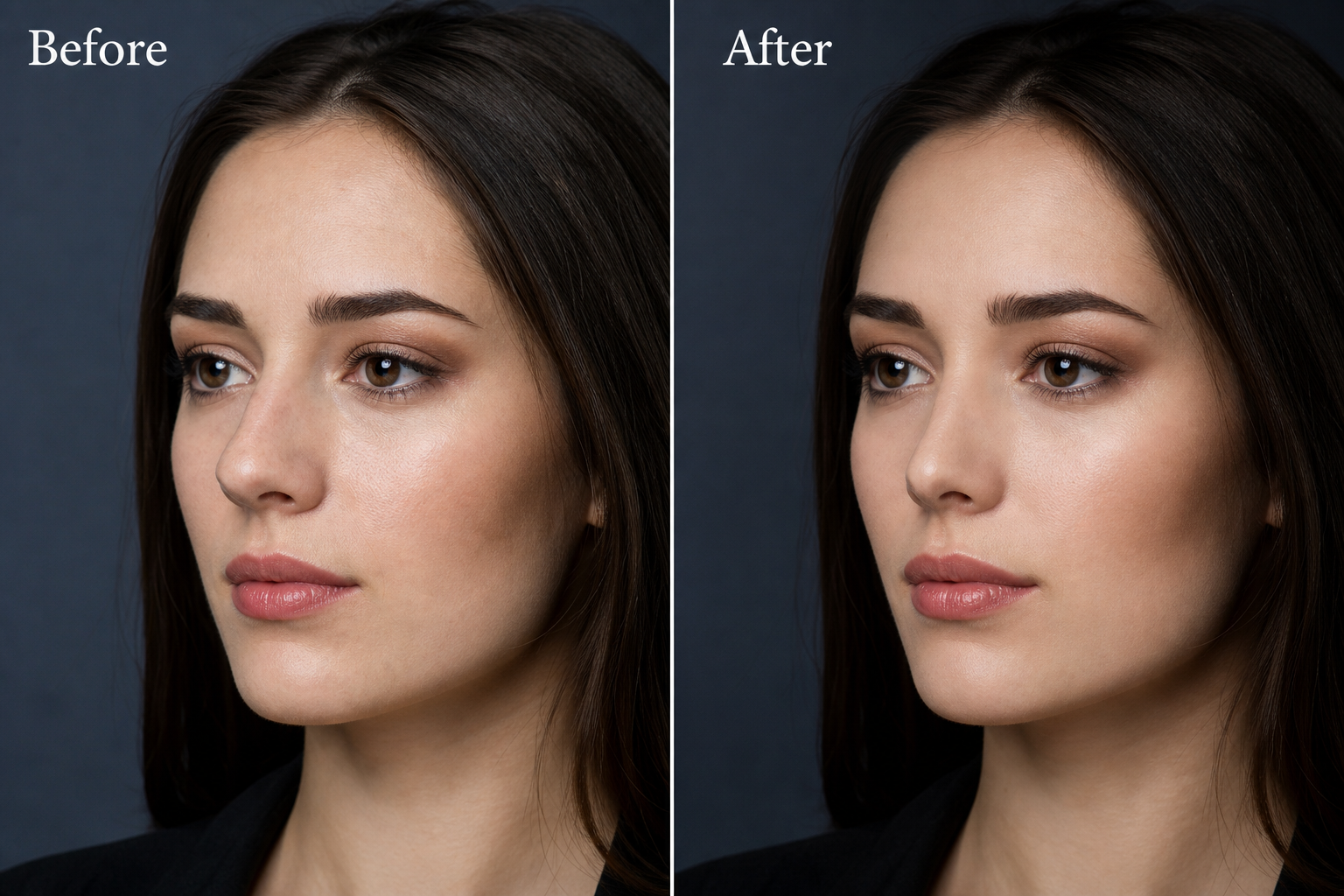
Take one clear front photo and one true profile. Preview 2–3 gentle directions that keep your face recognizable. Save the versions you would actually discuss — not the most dramatic edit.
FAQ
Is one nose type better?
No. Types are descriptive. Preference and facial balance are personal.
Can I be more than one type?
Yes. Most people mix traits. Bridge, tip, and width are clearer than a single label.